"Educational technology is the ethical study and application of theory, research, and practices to advance knowledge, improve learning and performance, and empower learners through strategic design, management, implementation, and evaluation of learning experiences and environments using appropriate processes and resources."
"Instructional design is the systematic and intentional process of creating effective, consistent, and reliable learning experiences. This learner-centered approach is dynamic and self-correcting, using empirical data and feedback to ensure specific goals are met through measurable outcomes."
Personalized learning pathways with automated feedback, predictive analytics, tutoring systems, and content generation that ranges from adaptive assessments to scaffolded learning tasks.
Focused, concise learning modules designed for quick consumption with immediate application and skill-building, meeting learners where their time and attention actually are.
Systematically collecting and interpreting data on learner behavior, engagement, and performance to guide the instructional decision-making process.
Designing learning experiences with expanded accessibility at the forefront, embracing multiple means of engagement to center learner agency and allow for flexibility in assessment.
Creating authentic simulations and experiential learning opportunities using XR, AR and VR to build context-rich, embodied learning experiences.
Utilizing digital communities, shared knowledge systems, and participatory culture to deepen understanding through connection and collaboration.
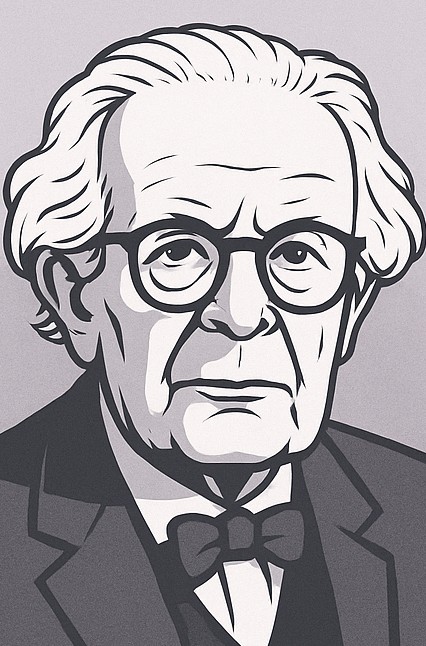
Swiss developmental psychologist whose work provided the foundation for cognitive constructivism. Piaget theorized that learners actively build knowledge through engagement with their environment, progressing through four stages of cognitive development. He gave us the ideas of schemas, assimilation, and accommodation transforming learning from a passive process to an active internal reorganization of understanding with profound impact on curriculum and instructional design.

American psychologist who advanced cognitive learning theory and shifted education toward inquiry, discovery, and meaning-making. Bruner argued that learners benefit from structured support — scaffolding — and introduced the concept of the spiral curriculum: the idea that complex ideas can be revisited at increasing levels of sophistication as learners grow.
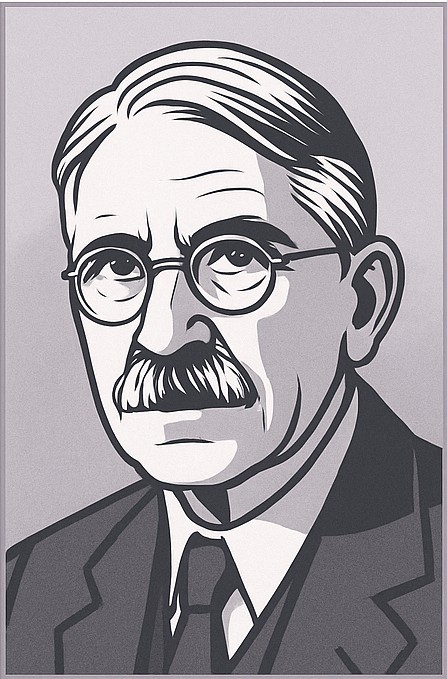
American philosopher and educational reformer whose ideas formed the groundwork for experiential and pragmatic constructivism. Dewey theorized that learning occurs through experience, reflection, and active participation in real-world problem-solving. His emphasis on democratic classrooms, inquiry practice, and civic life moved the learner from passive reception to engaged participation through hands-on, collaborative, and authentic contexts.
Behaviorism emerged as a scientific approach grounded in observable behaviors, positing that learning forms associations between stimuli and responses strengthened through reinforcement. Pavlov demonstrated this through classical conditioning; B.F. Skinner propelled the field forward by defining learning through observable, measurable behavioral changes. Behaviorism gave IDT a framework that was scientific, measurable, and structured while providing a critical leap into modern instructional practice.
Born from the limitations of Behaviorism, Cognitivism argued that learning is internal and involves mental processes of perception, memory, and reasoning. Drawing on Piaget's schema theory, this shift recognized the mind as a legitimate object of study. Effective instruction was seen as supporting attention, encoding, retrieval, and metacognitive regulation. Robert Gagné revolutionized IDT by integrating cognitive psychology into a systematic model: the Nine Events of Instruction.
Constructivism argues that learners actively construct knowledge through experience, interpretation, reflection, and social interaction. Prior understanding, context, and culture are central to integrating new information. The teacher shifted from authority to facilitator, with learners engaging in inquiry and collaboration. Vygotsky introduced the Zone of Proximal Development and scaffolding as core to social learning; communities of practice emerged as a dominant learning model.
A digital-age theory arguing that learning moves from an internal process to one shaped by external connections to people, systems, and technologies. Knowledge is both internal and external, found through databases, online networks, and social communities. Siemens emphasized networked learning and digital cognition; Downes extended this through personal learning environments and open online courses. Connectivism sees learning as continuous, ongoing, and deeply invested in digital tools and digital literacy.
My personal philosophy is to center the agency of learners, build community-centered spaces that foster true belonging and connection, provide equitable access, and encourage autonomy through scaffolding, all while thoughtfully using technology to enhance human relationality and cognitive development.
As an aspiring Instructional Designer, developing your own voice in the form of a personal philosophy is a crucial step in growth and professional identity. Your philosophy guides and directs your work, communication, and values in the field. Below is the earliest version of my personal philosophy statement.
📄 View PDFBeginning this journey with a mindset of engaging deeply with foundational principles of IDT has allowed me to develop a better, and more personal, understanding of the theoretical and methodological frameworks that shape the field. Exploring the history of instructional design, specifically the thoery, has impacted how I perceive the impact on learning environments and the influence each theory has held in the development and growth of new thoughts and ideas. These foundational concepts have also provided me with stronger internal conceptual structures that allow for more complete analysis and evaluation of learning problems, which in turn grounds my design process in thoughtful, intentional decision making grounded in evidence.
The foundational work this semester has shaped my sense of self and my professional identity. I have an increasing awareness of how my personal values, particularly my values of equity, transparency, and learner agency, align with the core principles of instructional design. As I move forward in the program, I intend to lean into the foundational concepts and my values to guide the choices I make in design, evaluation, and ethical consideration. My work will reflect the rigor and structure of the field of IDT, as well as my own ongoing committment to creating collaborative, accessible, community driven learning experiences.
- 1Association for Educational Communications and Technology. (2023). AECT definition. AECT Definition — Association for Educational Communications and Technology. https://www.aect.org/aect/about/aect-definition
- 2Graham, G. (2023, January 13). Behaviorism. Stanford Encyclopedia of Philosophy (Spring 2023 Edition), Edward N. Zalta & Uri Nodelman (eds.). https://plato.stanford.edu/archives/spr2023/entries/behaviorism/
- 3Irby, B. J., Brown, G., Lara-Alecio, R., & Jackson, S. (2013). The Handbook of Educational Theories. Information Age Publishing. https://ebookcentral.proquest.com/lib/csusb/detail.action?docID=3315873
- 4Khazanchi, D., Bernsteiner, R., Dilger, T., Groth, A., Mirski, P. J., Ploder, C., Schlögl, S., & Spieß, T. (2022). Strategies and best practices for effective elearning: Lessons from theory and experience. Journal of Information Technology Case and Application Research, 24(3), 153–165. https://doi.org/10.1080/15228053.2022.2118992
- 5Reiser, R. A., Carr-Chellman, A. A., & Dempsey, J. V. (Eds.). (2025). Trends and Issues in Instructional Design and Technology (5th ed.). Routledge.